 SWL Consulting
GM aims for a two-year vehicle cycle
GM says it wants to cut vehicle development to about two years from a traditional four- to five-year cycle. It is also targeting 40 times more computing power, up to 50% faster cellular connectivity and eyes-off highway driving in 2028. The question is how much AI can really compress heavy-industry timelines.
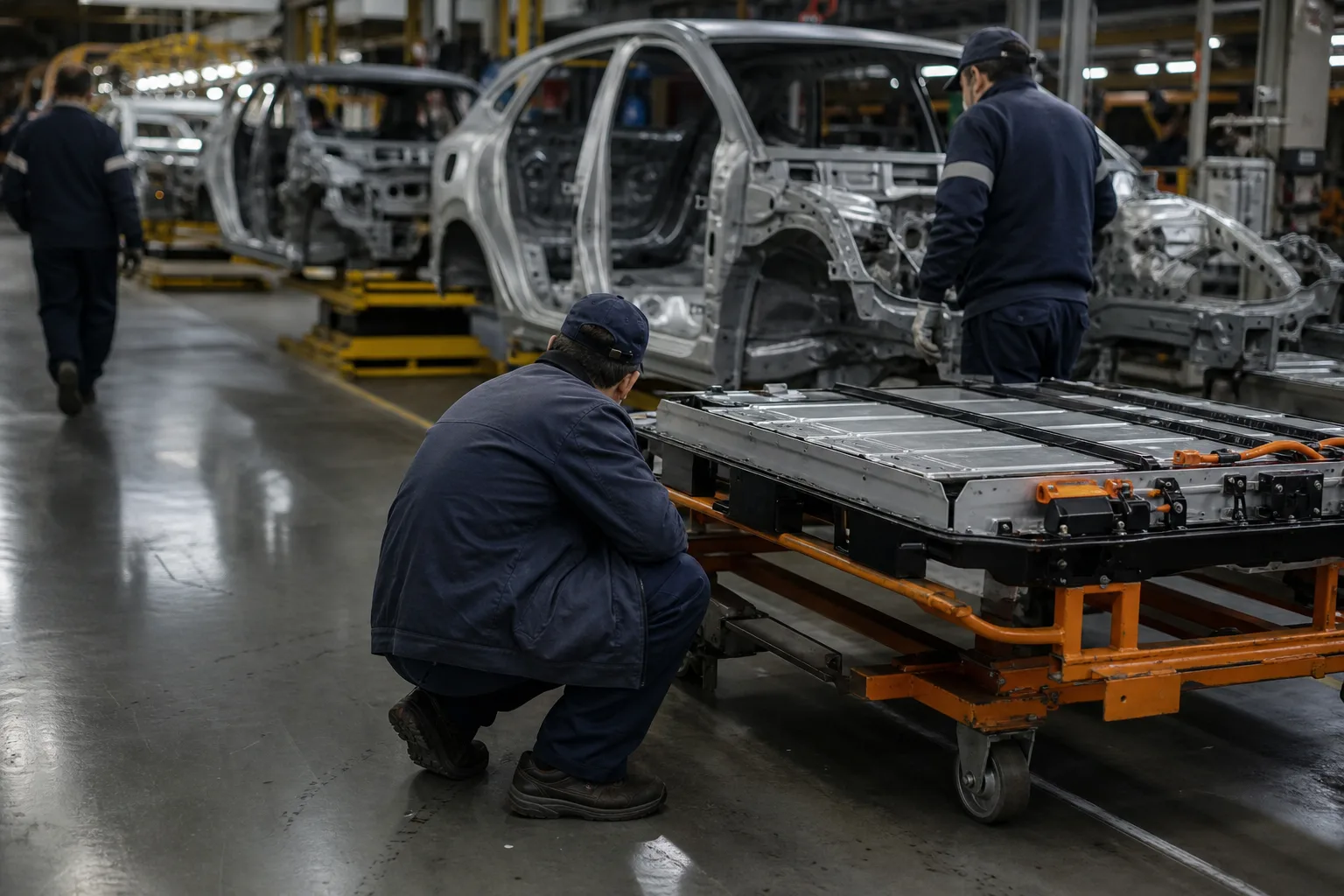
GM is trying to turn AI into a faster car factory
General Motors told CNBC on Wednesday that it wants to cut vehicle development time to roughly two years from a traditional four- to five-year cycle. The company says artificial intelligence, simulation and vehicle software will do part of that work. It is also pushing a proprietary OnStar AI assistant, a new generation of EVs and eyes-off highway driving in 2028. For executives, the real story is not the headline features. It is whether a century-old industrial company can use software to shorten the time it takes to design, test and launch products without losing control of cost, quality or risk.
Source: CNBC
A two-year development cycle is an operating target, not a slogan
GM said it is now targeting a vehicle development time of roughly two years from concept to production. That compares with a traditional four- to five-year cycle, according to the company. If it gets there, the change would affect far more than engineering calendars. It would change how the automaker allocates capital, times supplier commitments, sequences plant work and decides when to refresh a model line. In other words, this is a business model question, not only a technology question.
The timing matters because the company is responding to a market that is moving faster abroad and staying difficult at home. CNBC reported that Chinese automakers are growing outside the U.S. with rapid development times, and consulting firm AlixPartners believes China is bringing vehicles to market twice as fast as traditional automakers, with 40% to 50% less investment and a 30% cost advantage. GM did not give a timeline for reaching its two-year target, which means the number should be read as a direction of travel rather than a promised deadline.
Source: CNBC
The real leverage is in simulation and concurrent engineering
GM gave one concrete example of how the new approach could work. The company said it virtually tested more than 300,000 battery designs using its lithium manganese rich battery chemistry before building a single physical prototype. That is the kind of result that matters to a CFO and a COO. It suggests fewer physical iterations, less scrap, less rework and faster decisions on which designs deserve real-world testing.
GM says its new operating approach for vehicle development leans into enterprise AI and virtualization to increase speed. The company described it as a concurrent engineering model that lets teams innovate faster, improve continuously and scale new technologies across the lineup. That matters because many firms still run product, engineering and operations as separate handoffs. GM is trying to compress those handoffs into one workflow. If it works, the company can move from idea to launch with fewer pauses. If it fails, the cost of a bad digital decision can arrive later, after more capital has already been committed.
Source: CNBC
The vehicle is becoming a software platform
GM also said its next generation of EVs and combustion vehicles will have 40 times the computing power and up to 50% faster cellular connectivity than prior systems. That kind of step-up is not just about convenience. It is what makes over-the-air updates, onboard diagnostics, AI features and automated driving functions more practical. In effect, the car is being redesigned as a connected computing platform that can improve after sale instead of only at the factory.
The company also reconfirmed that it plans to launch a proprietary in-vehicle AI assistant through OnStar. According to CNBC, the assistant is expected to arrive in the coming months on the 2027 Cadillac Lyriq EV through an over-the-air update before expanding to other models. GM currently uses Google's Gemini for its in-vehicle assistant, but it says the GM-developed version will be more integrated with the vehicle and available through a subscription. That creates a recurring revenue opportunity, but it also raises the bar on reliability, data governance and customer support. Once software becomes part of the value proposition, outages and bad recommendations become commercial issues, not just technical ones.
Source: CNBC
Autonomy is still a long road, even with better tools
GM reconfirmed that it wants eyes-off highway driving in 2028, starting with the Cadillac Escalade IQ EV before rolling it out to other, higher-volume models. That is a meaningful commitment, but it is also a reminder that autonomy roadmaps are slow compared with software roadmaps. It has been five years since Mary Barra said she expected the automaker to offer personal autonomous vehicles this decade, which shows how long these programs can take even inside a company with the cash and scale to keep investing.
Sterling Anderson said GM's systems will be able to see more things through multiple types of sensors than a strictly camera-based system, and he argued that speed has real value. His point was not only about launching faster. It was about building a more performant system. That distinction matters for business leaders. Faster development only helps if the final product is good enough to earn trust, pass safety scrutiny and support a premium price. In autonomy, the gap between a credible promise and a scalable product is still where many plans break.
Source: CNBC
What to do now
The lesson for other companies is not that every business should build a car. It is that AI creates value when it shortens a real operating cycle, not when it sits on top of a process that still moves at the old speed. The companies that benefit first will be the ones that redesign workflows, rules and decision rights around the new tools.
- Map one core cycle that matters to your P&L, then measure how long it really takes from concept to launch or from request to delivery.
- Identify where simulation, digital twins or virtual testing can replace physical iteration without raising quality risk.
- Review which data sets are rich enough to support AI use in product, operations or customer service, and who owns them.
- Define where a faster software release would create revenue and where it would create operational or compliance risk.
- Set a quarterly review on AI programs that asks for cycle-time reduction, not just model adoption.