

ES

AI for Retail Growth and Resilience
AI for Retail Growth and Resilience
Retailers use AI for retail growth and resilience: supply-chain tools, influencer tactics, security hardening and drop-shipping shifts.
Retailers use AI for retail growth and resilience: supply-chain tools, influencer tactics, security hardening and drop-shipping shifts.
12 ene 2026

ES
AI and Retail: Practical Moves for Growth and Resilience
Retail leaders are testing AI for retail growth and resilience now. In the first 100 words, that means using AI to steady supply chains, speed decisions, protect systems, boost community-led marketing, and expand assortments with new logistics. This post pulls five recent stories together and explains what each development means for business teams, operations, and strategy.
## Supply chains get smarter: SPS Commerce’s new AI toolkit
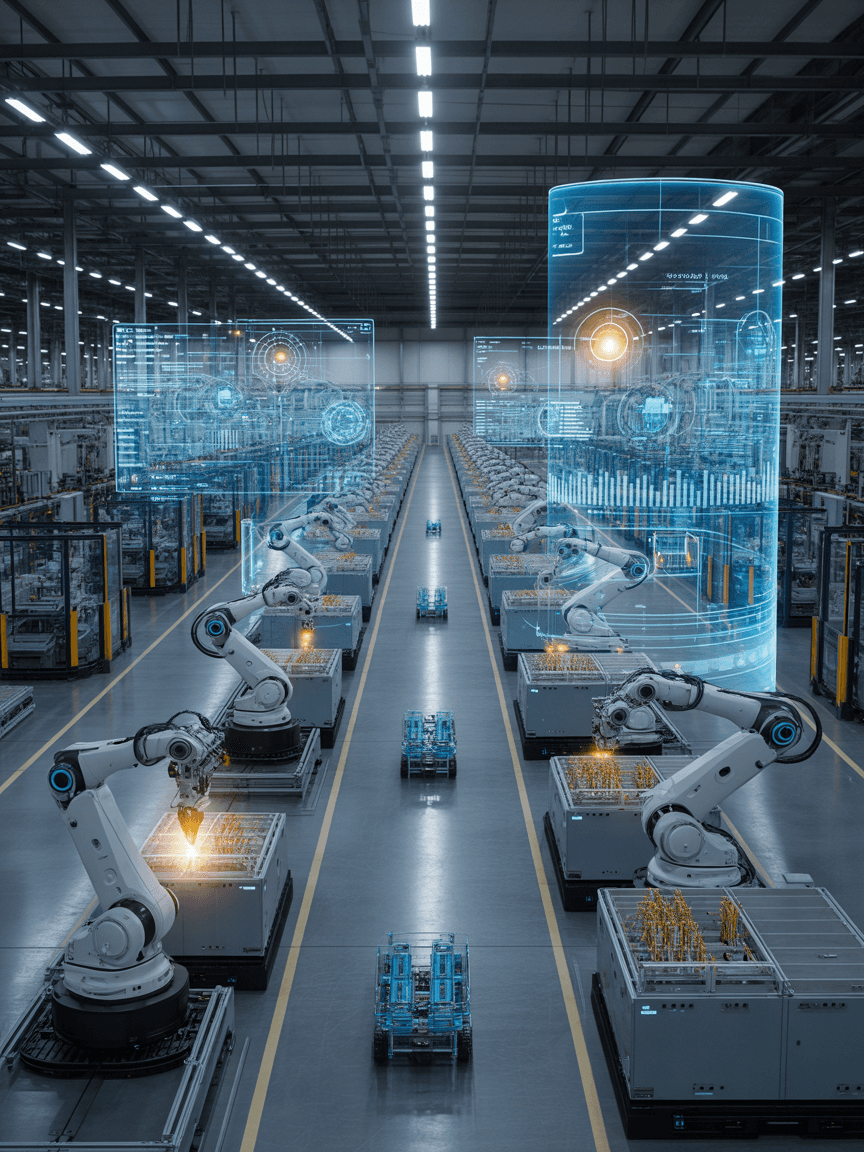
SPS Commerce introduced AI tools aimed at making supply chains less brittle and more automated. These updates focus on four shifting realities in retail and manufacturing: automation, fragmentation, volatility, and integration. The aim is to give retailers, brands, and manufacturers better visibility and faster decision cycles. Therefore, companies can respond more quickly to inventory surprises and changing demand.
For business leaders, this matters in a few concrete ways. First, automated signals can reduce the manual work that slows replenishment. Additionally, AI-driven forecasting smooths the tendency to overreact to short-term spikes. However, automation alone is not a panacea. Teams must align processes and owners around the insights the tools deliver. That means changing how purchasing, merchandising, and store operations act on predictive recommendations.
In practice, expect phased adoption. Early wins are likely around exception handling, not full end-to-end autonomy. Meanwhile, vendors will integrate these capabilities into broader commerce networks so drop-shippers, suppliers, and retailers can coordinate. The larger impact is strategic: retailers that adopt AI tools thoughtfully will be better able to expand assortments and serve customers without ballooning costs.
Source: Digital Commerce 360
Building a system for growth: strategy plus execution with AI for retail growth and resilience
A clear growth framework is now essential for large organizations. Planned Growth argues that predictable, sustainable growth comes from aligning strategy, execution, and optimization. Therefore, AI should slot into that system rather than be treated as a series of experiments. AI for retail growth and resilience becomes useful only when it supports shared priorities, consistent metrics, and accountable processes.
Start by defining where AI helps the most. For many retailers, the website and digital funnel are the execution hub. Additionally, integrating AI into content, paid media, and SEO can reduce acquisition costs and increase conversion efficiency. However, you must measure the right outcomes. Optimization loops should use data to refine and scale what works. That means regular reviews, cross-functional playbooks, and governance that prevents isolated teams from running conflicting AI experiments.
Practically, businesses should pilot AI in discrete parts of the customer journey and then connect the wins into a centralized growth framework. This approach reduces wasted spend and creates predictability across budgets and forecasts. Finally, invest in foundational assets—like data, tracking, and integrated workflows—so AI-driven insights can be actioned consistently across regions and teams.
Source: Planned Growth
Guarding agents and assistants: why security matters after prompt-injection demonstrations
A stark reminder emerged that AI agents can be exploited. The ZombieAgent writeup describes how prompt injection and memory persistence can let a malicious actor alter agent behavior and spread via connectors like Gmail. Therefore, security and governance are as essential as capability when deploying agentic AI. Businesses must treat AI agents like networked services that require oversight.
For retail teams, the risk is twofold. First, agents connected to email, inventories, or vendor systems could be manipulated to leak data or change orders. Second, attacker techniques that persist across sessions could create long-lived compromises. However, this does not mean stopping AI adoption. Instead, prioritize hardening: limit connector permissions, apply strict prompt and memory controls, and monitor agent outputs for anomalies. Additionally, add human-in-the-loop checks for high-risk actions like transfers of funds or supplier orders.
Governance programs should define acceptable uses, logging requirements, and incident response plans. Also, security teams must partner with lines of business to map where agents touch critical systems. In sum, safe adoption means layering controls, training users, and treating AI agents as part of the security perimeter.
Source: news.google.com
Community and creators: using influencers alongside AI for retail growth and resilience
Rising retail brands are leaning into influencers and community to cut through digital overload. Executives at NRF highlighted how brands like Mejuri and Coterie use community moments to drive organic amplification. Therefore, influencer strategies now complement digital channels instead of replacing them. Additionally, AI can assist by identifying micro-influencers, optimizing campaign cadence, and personalizing outreach.
The practical benefit is clearer ROI on content spend. Brands that cultivate community get viral lift at lower paid costs. However, authenticity is key. Influencer programs must prioritize real engagement and consistent brand values. AI helps by surfacing creators whose audiences align with high-value segments and by measuring which content types actually move conversion and retention.
For marketing teams, blend creator-first tactics with AI-enabled measurement. Use AI to track long-term brand lift and to tie content to revenue. Meanwhile, keep humans in control of creative decisions; authenticity cannot be fully automated. The impact is a more resilient acquisition mix—one that resists rising paid media costs and increases lifetime value through community connections.
Source: Marketing Dive
Assortment and logistics: Lane Bryant’s drop-shipping move and what it signals
Lane Bryant is launching a drop-shipping program with Rithum to carry more products without stocking them in its own warehouses. Therefore, drop-shipping remains a strategic lever for retailers to expand assortment quickly. This approach helps brands offer more choices while controlling inventory risk. Additionally, it lets retailers test categories before committing to full inventory investments.
For operations, this model requires strong partner integrations and clear fulfillment standards. AI and automation can help by routing orders, predicting supplier reliability, and setting dynamic rules for when products should be drop-shipped versus stocked. However, quality control and customer experience remain the hardest parts. Returns, delivery times, and inconsistent packaging can harm brand reputation if not tightly managed.
Retail leaders should treat drop-shipping as a complement to core inventory, not a replacement. Use it to trial new suppliers and styles, then shift successful items into stocked assortments. Meanwhile, invest in vendor SLAs, tracking, and customer communication so the shopper experience stays consistent. The likely outcome is a more flexible assortment strategy that supports seasonal demand and niche trends without bloating warehouses.
Source: Digital Commerce 360
Final Reflection: Connecting tools, teams, and trust
Across these stories, one clear theme emerges: AI for retail growth and resilience is as much organizational as it is technical. Supply-chain tools give speed and clarity. Growth frameworks align teams and make AI useful. Security work protects the gains. Community and creator strategies lower acquisition friction. Drop-shipping expands choice without inventory risk. Therefore, leaders must coordinate investments across platforms, people, and policies.
Look ahead with a balanced view. Adopt AI incrementally, govern it deliberately, and measure the business outcomes you care about. Additionally, treat trust—both customer trust and system integrity—as a competitive asset. If you do, AI will be a multiplier: enabling steadier supply chains, smarter marketing, safer operations, and wider assortments. The prize is resilience that supports growth in uncertain markets.
AI and Retail: Practical Moves for Growth and Resilience
Retail leaders are testing AI for retail growth and resilience now. In the first 100 words, that means using AI to steady supply chains, speed decisions, protect systems, boost community-led marketing, and expand assortments with new logistics. This post pulls five recent stories together and explains what each development means for business teams, operations, and strategy.
## Supply chains get smarter: SPS Commerce’s new AI toolkit
SPS Commerce introduced AI tools aimed at making supply chains less brittle and more automated. These updates focus on four shifting realities in retail and manufacturing: automation, fragmentation, volatility, and integration. The aim is to give retailers, brands, and manufacturers better visibility and faster decision cycles. Therefore, companies can respond more quickly to inventory surprises and changing demand.
For business leaders, this matters in a few concrete ways. First, automated signals can reduce the manual work that slows replenishment. Additionally, AI-driven forecasting smooths the tendency to overreact to short-term spikes. However, automation alone is not a panacea. Teams must align processes and owners around the insights the tools deliver. That means changing how purchasing, merchandising, and store operations act on predictive recommendations.
In practice, expect phased adoption. Early wins are likely around exception handling, not full end-to-end autonomy. Meanwhile, vendors will integrate these capabilities into broader commerce networks so drop-shippers, suppliers, and retailers can coordinate. The larger impact is strategic: retailers that adopt AI tools thoughtfully will be better able to expand assortments and serve customers without ballooning costs.
Source: Digital Commerce 360
Building a system for growth: strategy plus execution with AI for retail growth and resilience
A clear growth framework is now essential for large organizations. Planned Growth argues that predictable, sustainable growth comes from aligning strategy, execution, and optimization. Therefore, AI should slot into that system rather than be treated as a series of experiments. AI for retail growth and resilience becomes useful only when it supports shared priorities, consistent metrics, and accountable processes.
Start by defining where AI helps the most. For many retailers, the website and digital funnel are the execution hub. Additionally, integrating AI into content, paid media, and SEO can reduce acquisition costs and increase conversion efficiency. However, you must measure the right outcomes. Optimization loops should use data to refine and scale what works. That means regular reviews, cross-functional playbooks, and governance that prevents isolated teams from running conflicting AI experiments.
Practically, businesses should pilot AI in discrete parts of the customer journey and then connect the wins into a centralized growth framework. This approach reduces wasted spend and creates predictability across budgets and forecasts. Finally, invest in foundational assets—like data, tracking, and integrated workflows—so AI-driven insights can be actioned consistently across regions and teams.
Source: Planned Growth
Guarding agents and assistants: why security matters after prompt-injection demonstrations
A stark reminder emerged that AI agents can be exploited. The ZombieAgent writeup describes how prompt injection and memory persistence can let a malicious actor alter agent behavior and spread via connectors like Gmail. Therefore, security and governance are as essential as capability when deploying agentic AI. Businesses must treat AI agents like networked services that require oversight.
For retail teams, the risk is twofold. First, agents connected to email, inventories, or vendor systems could be manipulated to leak data or change orders. Second, attacker techniques that persist across sessions could create long-lived compromises. However, this does not mean stopping AI adoption. Instead, prioritize hardening: limit connector permissions, apply strict prompt and memory controls, and monitor agent outputs for anomalies. Additionally, add human-in-the-loop checks for high-risk actions like transfers of funds or supplier orders.
Governance programs should define acceptable uses, logging requirements, and incident response plans. Also, security teams must partner with lines of business to map where agents touch critical systems. In sum, safe adoption means layering controls, training users, and treating AI agents as part of the security perimeter.
Source: news.google.com
Community and creators: using influencers alongside AI for retail growth and resilience
Rising retail brands are leaning into influencers and community to cut through digital overload. Executives at NRF highlighted how brands like Mejuri and Coterie use community moments to drive organic amplification. Therefore, influencer strategies now complement digital channels instead of replacing them. Additionally, AI can assist by identifying micro-influencers, optimizing campaign cadence, and personalizing outreach.
The practical benefit is clearer ROI on content spend. Brands that cultivate community get viral lift at lower paid costs. However, authenticity is key. Influencer programs must prioritize real engagement and consistent brand values. AI helps by surfacing creators whose audiences align with high-value segments and by measuring which content types actually move conversion and retention.
For marketing teams, blend creator-first tactics with AI-enabled measurement. Use AI to track long-term brand lift and to tie content to revenue. Meanwhile, keep humans in control of creative decisions; authenticity cannot be fully automated. The impact is a more resilient acquisition mix—one that resists rising paid media costs and increases lifetime value through community connections.
Source: Marketing Dive
Assortment and logistics: Lane Bryant’s drop-shipping move and what it signals
Lane Bryant is launching a drop-shipping program with Rithum to carry more products without stocking them in its own warehouses. Therefore, drop-shipping remains a strategic lever for retailers to expand assortment quickly. This approach helps brands offer more choices while controlling inventory risk. Additionally, it lets retailers test categories before committing to full inventory investments.
For operations, this model requires strong partner integrations and clear fulfillment standards. AI and automation can help by routing orders, predicting supplier reliability, and setting dynamic rules for when products should be drop-shipped versus stocked. However, quality control and customer experience remain the hardest parts. Returns, delivery times, and inconsistent packaging can harm brand reputation if not tightly managed.
Retail leaders should treat drop-shipping as a complement to core inventory, not a replacement. Use it to trial new suppliers and styles, then shift successful items into stocked assortments. Meanwhile, invest in vendor SLAs, tracking, and customer communication so the shopper experience stays consistent. The likely outcome is a more flexible assortment strategy that supports seasonal demand and niche trends without bloating warehouses.
Source: Digital Commerce 360
Final Reflection: Connecting tools, teams, and trust
Across these stories, one clear theme emerges: AI for retail growth and resilience is as much organizational as it is technical. Supply-chain tools give speed and clarity. Growth frameworks align teams and make AI useful. Security work protects the gains. Community and creator strategies lower acquisition friction. Drop-shipping expands choice without inventory risk. Therefore, leaders must coordinate investments across platforms, people, and policies.
Look ahead with a balanced view. Adopt AI incrementally, govern it deliberately, and measure the business outcomes you care about. Additionally, treat trust—both customer trust and system integrity—as a competitive asset. If you do, AI will be a multiplier: enabling steadier supply chains, smarter marketing, safer operations, and wider assortments. The prize is resilience that supports growth in uncertain markets.




CONTÁCTANOS
¡Seamos aliados estratégicos en tu crecimiento!
Dirección de correo electrónico:
+5491173681459
Dirección de correo electrónico:
sales@swlconsulting.com
Dirección:
Av. del Libertador, 1000
Síguenos:





CONTÁCTANOS
¡Seamos aliados estratégicos en tu crecimiento!
Dirección de correo electrónico:
+5491173681459
Dirección de correo electrónico:
sales@swlconsulting.com
Dirección:
Av. del Libertador, 1000
Síguenos:
CONTÁCTANOS
¡Seamos aliados estratégicos en tu crecimiento!
Dirección de correo electrónico:
+5491173681459
Dirección de correo electrónico:
sales@swlconsulting.com
Dirección:
Av. del Libertador, 1000
Síguenos:
Suscríbete a nuestro boletín
© 2025 SWL Consulting. Todos los derechos reservados


Suscríbete a nuestro boletín
© 2025 SWL Consulting. Todos los derechos reservados