
Enterprise AI Integration and Governance: 2026 Brief
Enterprise AI Integration and Governance: 2026 Brief
How enterprise AI integration and governance is shaping 2026: cloud partnerships, cross-border risk, energy deals, industrial pipelines, and retail agents.
How enterprise AI integration and governance is shaping 2026: cloud partnerships, cross-border risk, energy deals, industrial pipelines, and retail agents.
Jan 12, 2026

Enterprise AI Integration and Governance: What Leaders Must Watch in 2026
Enterprise AI integration and governance is moving from pilot projects into broad operational change for companies. In this post I walk through five recent developments — cloud partnerships, cross-border compliance, energy and compute deals, industrial pipelines, and retail agent control — and explain what they mean for business leaders. Therefore, you’ll get practical context, likely impacts, and short projections to support decisions this year.
## Infosys-AWS: enterprise AI integration and governance in the cloud
Infosys’ move to integrate its Topaz AI with Amazon Q and Bedrock is a clear signal that big consultancies and cloud providers are tightening their partnerships. Infosys aims to boost generative AI across core industries and workflows by linking its platform to Amazon’s managed models and tooling. Therefore, enterprises should expect faster, cleaner paths to deploy generative features inside existing systems, from customer service to document workflows.
For business buyers this has two big implications. First, integration risk falls: a systems integrator plus cloud vendor can deliver tested patterns, reducing vendor fragmentation. However, that convenience can concentrate control. As a result, firms must build governance guardrails early — defining data flows, model usage policies, and remedies for vendor changes. Additionally, contracts should spell out responsibilities for model updates, security, and data residency.
Operationally, this partnership will speed pilots to production because both consulting and cloud teams can align roadmaps. Consequently, CIOs should prioritize interoperability, clear SLAs, and change-management plans that include retraining staff. Looking ahead, expect similar tie-ups across consultancies and hyperscalers, which may simplify enterprise AI adoption but raise questions about portability and long-term vendor lock-in.
Source: AI Business
Cross-border compliance: enterprise AI integration and governance challenges
Meta’s $2 billion acquisition of AI agent startup Manus drew a regulatory review from China’s Ministry of Commerce, highlighting a larger reality: cross-border deals now carry urgent compliance risk. The review focuses on export controls, technology transfer rules, and overseas investment regulations. Therefore, enterprise buyers of AI tech must reassess how international policy affects their sourcing and M&A plans.
For global IT leaders, the takeaway is clear. First, due diligence must expand beyond financials and product fit to include supply-chain exposure, local export controls, and geopolitical risk. Additionally, governance teams should map where models, training data, and talent cross borders. For example, a vendor based in one jurisdiction may rely on data, models, or tooling tied to another, which can trigger regulatory scrutiny.
Moreover, procurement strategies should incorporate contingency plans: alternate suppliers, contractual escape clauses, and legal frameworks to handle sudden regulatory action. As a result, enterprises that plan for cross-border complexity will be less likely to face disruptions when regulator attention spikes. Finally, expect deal timelines to lengthen and for more clauses that protect buyers from post-closing regulatory interference.
Source: Artificial Intelligence News
Energy and compute: enterprise AI integration and governance at scale
Meta’s deals with nuclear energy companies underline a fundamental planning area for large-scale AI: energy certainty. The agreements aim to secure stable power for AI data centers and to bolster Meta’s image as a leader in the AI race. Consequently, enterprises that depend on heavy compute are now watching energy sources as part of their infrastructure strategy.
This development matters for two reasons. First, compute cost and availability influence where and when organizations run large models. Therefore, IT and sustainability teams should collaborate on a long-term energy strategy that balances cost, reliability, and carbon goals. Additionally, vendors locking in dedicated energy — whether from renewables, nuclear, or other sources — may offer better predictability for high-volume workloads.
Second, energy decisions interact with governance. For example, where data centers are located affects jurisdiction, data residency, and compliance obligations. As a result, choosing a compute partner is also choosing a regulatory posture. Companies should therefore assess not just raw performance, but the legal and environmental implications of a provider’s energy deals.
Looking ahead, expect more compute contracts tied to energy arrangements. Consequently, procurement and legal teams will need to negotiate terms that address outages, price volatility, and environmental reporting.
Source: AI Business
Industrial adoption: Siemens, Nvidia, and practical AI pipelines
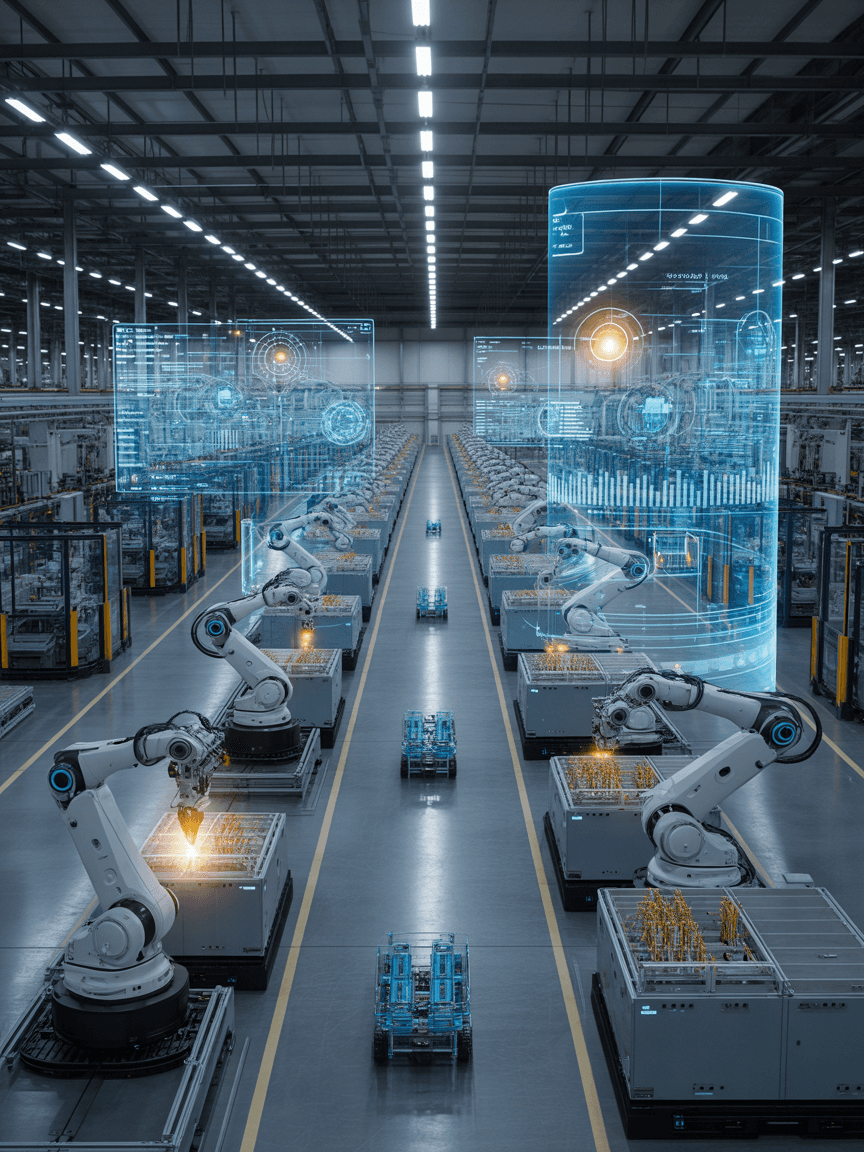
Siemens’ new industrial AI pipeline, developed alongside Nvidia, shows how AI is moving into manufacturing in pragmatic ways. The company is releasing products to make it easier for factories to apply AI, from quality inspection to predictive maintenance. Therefore, industrial firms can expect more packaged solutions that bridge AI models with shop-floor systems.
This trend reduces one big barrier: integration complexity. Instead of building custom stacks, manufacturers can adopt tested pipelines that connect sensors, edge compute, and model deployment. However, leaders should remember that industrial environments demand strict safety and reliability standards. Consequently, governance here must include operational risk assessments, human oversight rules, and clear rollback plans.
Moreover, partnerships between established industrial suppliers and AI platform companies create new vendor dynamics. For example, relying on a combined Siemens-Nvidia stack may accelerate deployment but can also centralize control. Therefore, manufacturing IT teams should define exit strategies and ensure data schemas remain portable.
Finally, this pipeline approach will likely drive faster ROI for AI in manufacturing. For leaders, the practical steps are straightforward: prioritize use cases with measurable outcomes, set clear KPIs, and invest in upskilling operations teams to work with AI-assisted tools.
Source: AI Business
Retail control: agents, customer experience, and ownership
Retailers such as Kroger and Lowe’s are testing AI agents without handing control to dominant tech platforms. The core concern is simple: when customers use third-party chatbots or assistants to shop, retailers can lose control over how products are displayed and bundled. Therefore, keeping control over agent behavior and data is becoming a competitive priority.
Retailers are exploring in-house or vendor-neutral agents that respect merchandising strategies, pricing rules, and privacy standards. Additionally, this approach protects brand experience. For example, if a third-party assistant ranks or bundles products in ways that hurt margins or customer trust, retailers need the power to correct that behavior quickly.
From a governance perspective, retailers should define who owns interaction data, how personalization is allowed, and which commercial rules apply in automated conversations. Consequently, contracts with agent providers must include clear clauses on control, transparency, and update processes. Moreover, retailers should run regular audits of agent decisions to ensure alignment with business goals.
Looking forward, expect more retailers to adopt hybrid models: hosted agents that use central platforms for scalability but keep critical decision logic and product data under retailer control. As a result, customers will get smarter shopping experiences while retailers retain strategic oversight.
Source: Artificial Intelligence News
Final Reflection: Governance as the connective tissue
Across cloud partnerships, cross-border reviews, energy deals, industrial pipelines, and retail agents, one theme ties everything together: governance. Therefore, enterprise AI integration and governance is not an optional add-on — it is the connective tissue that turns promising technologies into reliable business capabilities. Additionally, governance here means more than risk control; it includes vendor strategy, contractual clarity, operational safeguards, and choices about energy and data residency.
Moving forward, businesses should treat governance as a strategic function. For example, procurement, legal, IT, and sustainability teams must coordinate early in vendor selection. Meanwhile, vendors and partners will continue to offer integrated stacks that simplify deployment, and leaders will need to balance speed with portability. Finally, companies that adopt clear policies and pragmatic contingency plans will gain the dual benefits of faster AI rollout and lower long-term exposure.
In short, 2026 will be a year of consolidation and clarification. Consequently, organizations that make governance a planning priority will turn today’s partnerships and infrastructure moves into lasting advantage.
Enterprise AI Integration and Governance: What Leaders Must Watch in 2026
Enterprise AI integration and governance is moving from pilot projects into broad operational change for companies. In this post I walk through five recent developments — cloud partnerships, cross-border compliance, energy and compute deals, industrial pipelines, and retail agent control — and explain what they mean for business leaders. Therefore, you’ll get practical context, likely impacts, and short projections to support decisions this year.
## Infosys-AWS: enterprise AI integration and governance in the cloud
Infosys’ move to integrate its Topaz AI with Amazon Q and Bedrock is a clear signal that big consultancies and cloud providers are tightening their partnerships. Infosys aims to boost generative AI across core industries and workflows by linking its platform to Amazon’s managed models and tooling. Therefore, enterprises should expect faster, cleaner paths to deploy generative features inside existing systems, from customer service to document workflows.
For business buyers this has two big implications. First, integration risk falls: a systems integrator plus cloud vendor can deliver tested patterns, reducing vendor fragmentation. However, that convenience can concentrate control. As a result, firms must build governance guardrails early — defining data flows, model usage policies, and remedies for vendor changes. Additionally, contracts should spell out responsibilities for model updates, security, and data residency.
Operationally, this partnership will speed pilots to production because both consulting and cloud teams can align roadmaps. Consequently, CIOs should prioritize interoperability, clear SLAs, and change-management plans that include retraining staff. Looking ahead, expect similar tie-ups across consultancies and hyperscalers, which may simplify enterprise AI adoption but raise questions about portability and long-term vendor lock-in.
Source: AI Business
Cross-border compliance: enterprise AI integration and governance challenges
Meta’s $2 billion acquisition of AI agent startup Manus drew a regulatory review from China’s Ministry of Commerce, highlighting a larger reality: cross-border deals now carry urgent compliance risk. The review focuses on export controls, technology transfer rules, and overseas investment regulations. Therefore, enterprise buyers of AI tech must reassess how international policy affects their sourcing and M&A plans.
For global IT leaders, the takeaway is clear. First, due diligence must expand beyond financials and product fit to include supply-chain exposure, local export controls, and geopolitical risk. Additionally, governance teams should map where models, training data, and talent cross borders. For example, a vendor based in one jurisdiction may rely on data, models, or tooling tied to another, which can trigger regulatory scrutiny.
Moreover, procurement strategies should incorporate contingency plans: alternate suppliers, contractual escape clauses, and legal frameworks to handle sudden regulatory action. As a result, enterprises that plan for cross-border complexity will be less likely to face disruptions when regulator attention spikes. Finally, expect deal timelines to lengthen and for more clauses that protect buyers from post-closing regulatory interference.
Source: Artificial Intelligence News
Energy and compute: enterprise AI integration and governance at scale
Meta’s deals with nuclear energy companies underline a fundamental planning area for large-scale AI: energy certainty. The agreements aim to secure stable power for AI data centers and to bolster Meta’s image as a leader in the AI race. Consequently, enterprises that depend on heavy compute are now watching energy sources as part of their infrastructure strategy.
This development matters for two reasons. First, compute cost and availability influence where and when organizations run large models. Therefore, IT and sustainability teams should collaborate on a long-term energy strategy that balances cost, reliability, and carbon goals. Additionally, vendors locking in dedicated energy — whether from renewables, nuclear, or other sources — may offer better predictability for high-volume workloads.
Second, energy decisions interact with governance. For example, where data centers are located affects jurisdiction, data residency, and compliance obligations. As a result, choosing a compute partner is also choosing a regulatory posture. Companies should therefore assess not just raw performance, but the legal and environmental implications of a provider’s energy deals.
Looking ahead, expect more compute contracts tied to energy arrangements. Consequently, procurement and legal teams will need to negotiate terms that address outages, price volatility, and environmental reporting.
Source: AI Business
Industrial adoption: Siemens, Nvidia, and practical AI pipelines
Siemens’ new industrial AI pipeline, developed alongside Nvidia, shows how AI is moving into manufacturing in pragmatic ways. The company is releasing products to make it easier for factories to apply AI, from quality inspection to predictive maintenance. Therefore, industrial firms can expect more packaged solutions that bridge AI models with shop-floor systems.
This trend reduces one big barrier: integration complexity. Instead of building custom stacks, manufacturers can adopt tested pipelines that connect sensors, edge compute, and model deployment. However, leaders should remember that industrial environments demand strict safety and reliability standards. Consequently, governance here must include operational risk assessments, human oversight rules, and clear rollback plans.
Moreover, partnerships between established industrial suppliers and AI platform companies create new vendor dynamics. For example, relying on a combined Siemens-Nvidia stack may accelerate deployment but can also centralize control. Therefore, manufacturing IT teams should define exit strategies and ensure data schemas remain portable.
Finally, this pipeline approach will likely drive faster ROI for AI in manufacturing. For leaders, the practical steps are straightforward: prioritize use cases with measurable outcomes, set clear KPIs, and invest in upskilling operations teams to work with AI-assisted tools.
Source: AI Business
Retail control: agents, customer experience, and ownership
Retailers such as Kroger and Lowe’s are testing AI agents without handing control to dominant tech platforms. The core concern is simple: when customers use third-party chatbots or assistants to shop, retailers can lose control over how products are displayed and bundled. Therefore, keeping control over agent behavior and data is becoming a competitive priority.
Retailers are exploring in-house or vendor-neutral agents that respect merchandising strategies, pricing rules, and privacy standards. Additionally, this approach protects brand experience. For example, if a third-party assistant ranks or bundles products in ways that hurt margins or customer trust, retailers need the power to correct that behavior quickly.
From a governance perspective, retailers should define who owns interaction data, how personalization is allowed, and which commercial rules apply in automated conversations. Consequently, contracts with agent providers must include clear clauses on control, transparency, and update processes. Moreover, retailers should run regular audits of agent decisions to ensure alignment with business goals.
Looking forward, expect more retailers to adopt hybrid models: hosted agents that use central platforms for scalability but keep critical decision logic and product data under retailer control. As a result, customers will get smarter shopping experiences while retailers retain strategic oversight.
Source: Artificial Intelligence News
Final Reflection: Governance as the connective tissue
Across cloud partnerships, cross-border reviews, energy deals, industrial pipelines, and retail agents, one theme ties everything together: governance. Therefore, enterprise AI integration and governance is not an optional add-on — it is the connective tissue that turns promising technologies into reliable business capabilities. Additionally, governance here means more than risk control; it includes vendor strategy, contractual clarity, operational safeguards, and choices about energy and data residency.
Moving forward, businesses should treat governance as a strategic function. For example, procurement, legal, IT, and sustainability teams must coordinate early in vendor selection. Meanwhile, vendors and partners will continue to offer integrated stacks that simplify deployment, and leaders will need to balance speed with portability. Finally, companies that adopt clear policies and pragmatic contingency plans will gain the dual benefits of faster AI rollout and lower long-term exposure.
In short, 2026 will be a year of consolidation and clarification. Consequently, organizations that make governance a planning priority will turn today’s partnerships and infrastructure moves into lasting advantage.





CONTACT US
Let's get your business to the next level
Phone Number:
+5491133038126
Email Address:
sales@swlconsulting.com
Address:
Av. del Libertador, 1000
Follow Us:





CONTACT US
Let's get your business to the next level
Phone Number:
+5491133038126
Email Address:
sales@swlconsulting.com
Address:
Av. del Libertador, 1000
Follow Us:
CONTACT US
Let's get your business to the next level
Phone Number:
+5491133038126
Email Address:
sales@swlconsulting.com
Address:
Av. del Libertador, 1000
Follow Us:

Subscribe to our newsletter
© 2025 SWL Consulting. All rights reserved