
Enterprise AI Infrastructure Investments Guide
Enterprise AI Infrastructure Investments Guide
A clear guide to enterprise AI infrastructure investments: models, robots, and data centers shaping business AI strategy today.
A clear guide to enterprise AI infrastructure investments: models, robots, and data centers shaping business AI strategy today.
Mar 18, 2026

How Models, Robots, and Data Centers Are Reshaping Enterprise AI
The pace of enterprise AI change is pushing leaders to rethink how they spend on infrastructure. The phrase enterprise AI infrastructure investments captures this shift. New, smaller models, robotics tools, sovereign data centers, and regional platforms are changing where companies put money, how they scale, and how they manage risk. Therefore, business leaders need a short, clear map of what’s happening and what to watch next.
## GPT mini models and why enterprise AI infrastructure investments matter
OpenAI’s announcement of GPT-5.4 mini and nano signals a practical shift. These smaller, faster versions of a flagship model are optimized for coding, tool use, multimodal reasoning, and high-volume API or sub-agent workloads. For enterprises, this means two things. First, organizations can run many more AI-driven tasks at lower cost. Therefore, workloads that were once too expensive or slow can become routine. Second, sub-agents—many small models working together—become feasible. This changes infrastructure needs from one big model endpoint to fleets of lightweight services.
For IT and finance teams, that implies a rebalancing. Previously, the priority was raw GPU power for one or two large models. Now, capacity planning must include networked instances, efficient inference hardware, and software for orchestration. Additionally, deployment flexibility matters more. Companies will likely combine cloud, edge, and on-prem resources. This hybrid approach reduces latency for interactive tasks and keeps sensitive data local.
In short, mini and nano models lower the entry bar for agentic applications. However, they also increase the number of moving parts enterprises must manage. Therefore, investments will shift toward tooling, orchestration, and cost-efficient compute, rather than only on mega-scale GPUs.
Source: OpenAI Blog
Nvidia’s robotics push and enterprise AI infrastructure investments for the physical world
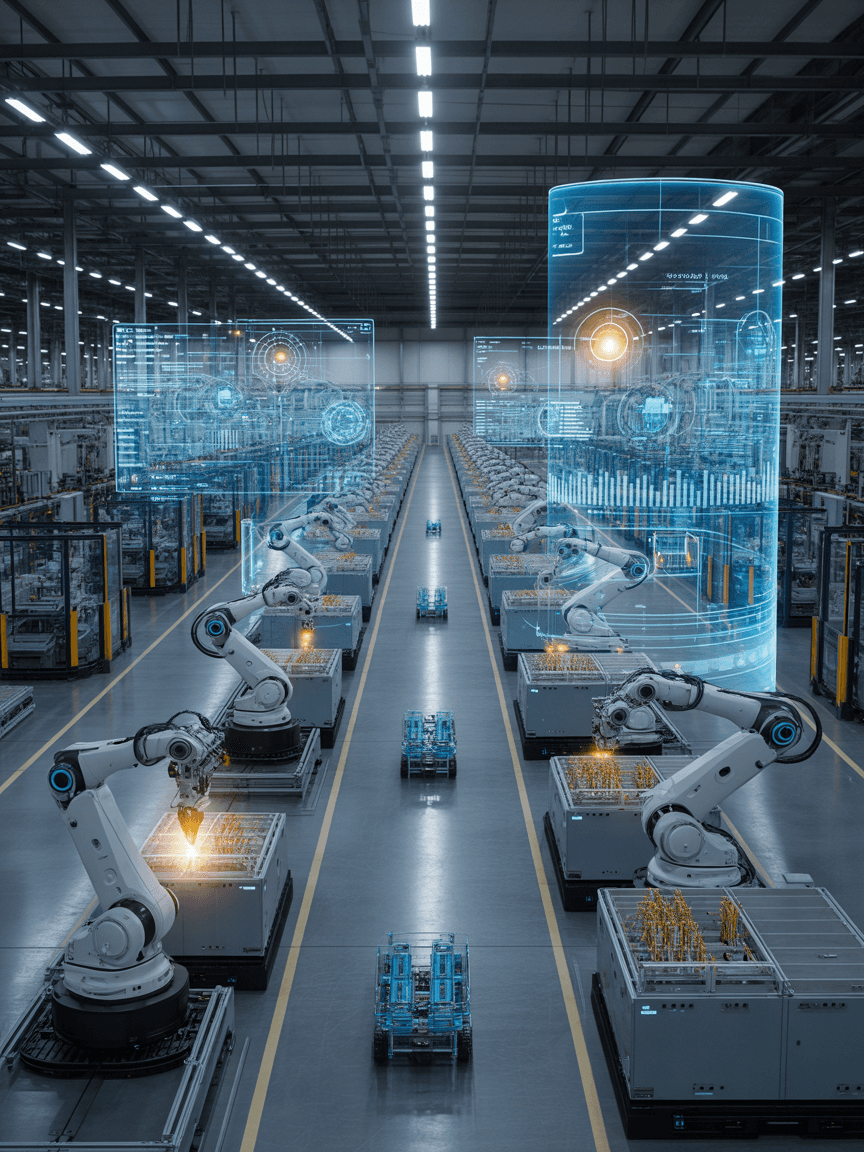
Nvidia’s latest moves into “physical AI”—with new robotics models and a Data Factory toolkit—point to the next frontier for enterprise AI. Robotics models bring machine learning off the screen and into warehouses, factories, and stores. Meanwhile, Data Factory tooling is aimed at making real-world sensor data usable and scalable. For businesses, this changes the mix of investments: compute is still crucial, but so are data pipelines, sensors, and systems integration.
Therefore, companies that rely on physical operations must plan for a different kind of infrastructure. They will need hardware at the edge for real-time control, storage for high-volume sensor streams, and software that ingests, labels, and refines that data. Additionally, the integration burden grows. Enterprises must bridge cloud-based model training with on-site inference and robotic controllers. This requires both partnerships and internal skill shifts.
Moreover, Nvidia’s push signals vendor consolidation in this niche. For decision-makers, that means evaluating platforms not only on raw performance but on the ecosystem they enable. In practice, this will push budgets toward platforms that promise end-to-end support: from data capture to model deployment on robots. Therefore, physical AI will drive targeted infrastructure investments that blend compute, connectivity, and domain expertise.
Source: AI Business
Goldman Sachs’ view: data centers and the geography of enterprise AI infrastructure investments
Goldman Sachs’ analysis highlights a broader trend: AI investment is becoming more selective and infrastructure-focused. Investors and companies are shifting attention toward the data centers and facilities that actually run AI systems. This is a practical reaction. As models get bigger and workloads more variable, the total cost of ownership depends heavily on where and how compute is provisioned.
Consequently, enterprises must think strategically about location and provider choices. For example, colocated data centers can offer predictable costs, lower latency for certain applications, and control over compliance. Conversely, public clouds remain attractive for flexibility and rapid experimentation. Therefore, hybrid strategies will be common, with specific workloads routed to the place that optimizes cost, performance, and governance.
Additionally, this shift affects vendor negotiations and long-term contracts. Companies will likely invest in capacity planning, reserved compute, and partnerships with data center operators. For decision-makers, understanding total cost—power, cooling, network, and data movement—is now central. Moreover, this has ripple effects on procurement, engineering staffing, and sustainability goals. In short, the investment spotlight is no longer just on models; it’s on the facilities that make those models possible.
Source: Artificial Intelligence News
Regional compute expansion: South Korea’s sovereign AI data center and what it means for enterprise AI infrastructure investments
A US startup’s plan to build South Korea’s largest AI data center is part of a larger trend toward regional and sovereign compute capacity. Countries and large organizations are increasingly focused on domestic infrastructure for strategic autonomy, data protection, and specialized performance. For enterprises operating globally, this trend creates both opportunities and decisions.
First, regional data centers can reduce latency and help meet local compliance rules. Therefore, businesses with regional users or sensitive data will favor this approach. Second, local facilities can open partnership and procurement options that large global providers do not offer. For example, enterprises can leverage local incentives or collaborate on tailored capacity plans. However, this also fragments the market. Companies must design systems that can run across multiple regions without sprawl or excessive cost.
Moreover, this trend will affect supply chains for hardware and talent. Enterprises will need to align hiring, operations, and vendor selection with regional capabilities. Additionally, working with local data centers may provide resilience—diverse geography reduces single-point risks. In short, the rise of sovereign and regional AI facilities means enterprises must include geography as a strategic variable in their infrastructure investments.
Source: AI Business
Enterprise agent platforms, competition, and implications for enterprise AI infrastructure investments
Alibaba’s launch of an enterprise AI agent platform adds competitive pressure in the agentic AI market. Alongside offerings from other big vendors, this increases the choices enterprises face for agent platforms and enterprise tooling. For business teams, agents promise automation, personalized workflows, and productivity gains. However, they also require infrastructure that supports many concurrent, stateful interactions.
Therefore, enterprises must evaluate platforms on performance, integration, and governance. Agent platforms multiply endpoints, so infrastructure must handle more connections and state management. Additionally, regional or vendor-specific platforms may require specialized integrations or data flows. This makes hybrid architectures even more relevant.
Moreover, competition among vendors can be a benefit. Vendors will differentiate on ease of deployment, cost efficiency, and enterprise features like security and admin controls. As a result, companies can negotiate for better terms or find platforms that match their risk profile. However, the strategic choice remains: invest in an external platform or build proprietary capabilities. Either way, agent adoption will steer budgets toward orchestration, monitoring, and identity systems that keep agents safe and reliable.
Source: AI Business
Final Reflection: Connecting models, robots, and data centers into a clear plan
Taken together, these stories form a coherent narrative. Smaller, optimized models make agentic workloads economical. Robotics models and tooling extend AI into physical operations. Financial analysis and regional data-center projects show that compute location and scale matter more than ever. Therefore, enterprise AI infrastructure investments are becoming multidimensional: not just about raw GPUs, but about orchestration, edge and region planning, data pipelines, and vendor ecosystems.
For business leaders, the path forward is practical. Prioritize hybrid strategies that match workloads to the right environment. Invest in orchestration and monitoring to tame many small models and agents. Finally, factor geography, sovereignty, and vendor ecosystems into long-term contracts. If you do this, your organization will gain both agility and control as AI moves from experiments to mission-critical systems.
Overall, the next wave of AI adoption will reward disciplined infrastructure planning as much as model performance. Therefore, treat infrastructure strategy as a core business decision, not a back-office technicality.
How Models, Robots, and Data Centers Are Reshaping Enterprise AI
The pace of enterprise AI change is pushing leaders to rethink how they spend on infrastructure. The phrase enterprise AI infrastructure investments captures this shift. New, smaller models, robotics tools, sovereign data centers, and regional platforms are changing where companies put money, how they scale, and how they manage risk. Therefore, business leaders need a short, clear map of what’s happening and what to watch next.
## GPT mini models and why enterprise AI infrastructure investments matter
OpenAI’s announcement of GPT-5.4 mini and nano signals a practical shift. These smaller, faster versions of a flagship model are optimized for coding, tool use, multimodal reasoning, and high-volume API or sub-agent workloads. For enterprises, this means two things. First, organizations can run many more AI-driven tasks at lower cost. Therefore, workloads that were once too expensive or slow can become routine. Second, sub-agents—many small models working together—become feasible. This changes infrastructure needs from one big model endpoint to fleets of lightweight services.
For IT and finance teams, that implies a rebalancing. Previously, the priority was raw GPU power for one or two large models. Now, capacity planning must include networked instances, efficient inference hardware, and software for orchestration. Additionally, deployment flexibility matters more. Companies will likely combine cloud, edge, and on-prem resources. This hybrid approach reduces latency for interactive tasks and keeps sensitive data local.
In short, mini and nano models lower the entry bar for agentic applications. However, they also increase the number of moving parts enterprises must manage. Therefore, investments will shift toward tooling, orchestration, and cost-efficient compute, rather than only on mega-scale GPUs.
Source: OpenAI Blog
Nvidia’s robotics push and enterprise AI infrastructure investments for the physical world
Nvidia’s latest moves into “physical AI”—with new robotics models and a Data Factory toolkit—point to the next frontier for enterprise AI. Robotics models bring machine learning off the screen and into warehouses, factories, and stores. Meanwhile, Data Factory tooling is aimed at making real-world sensor data usable and scalable. For businesses, this changes the mix of investments: compute is still crucial, but so are data pipelines, sensors, and systems integration.
Therefore, companies that rely on physical operations must plan for a different kind of infrastructure. They will need hardware at the edge for real-time control, storage for high-volume sensor streams, and software that ingests, labels, and refines that data. Additionally, the integration burden grows. Enterprises must bridge cloud-based model training with on-site inference and robotic controllers. This requires both partnerships and internal skill shifts.
Moreover, Nvidia’s push signals vendor consolidation in this niche. For decision-makers, that means evaluating platforms not only on raw performance but on the ecosystem they enable. In practice, this will push budgets toward platforms that promise end-to-end support: from data capture to model deployment on robots. Therefore, physical AI will drive targeted infrastructure investments that blend compute, connectivity, and domain expertise.
Source: AI Business
Goldman Sachs’ view: data centers and the geography of enterprise AI infrastructure investments
Goldman Sachs’ analysis highlights a broader trend: AI investment is becoming more selective and infrastructure-focused. Investors and companies are shifting attention toward the data centers and facilities that actually run AI systems. This is a practical reaction. As models get bigger and workloads more variable, the total cost of ownership depends heavily on where and how compute is provisioned.
Consequently, enterprises must think strategically about location and provider choices. For example, colocated data centers can offer predictable costs, lower latency for certain applications, and control over compliance. Conversely, public clouds remain attractive for flexibility and rapid experimentation. Therefore, hybrid strategies will be common, with specific workloads routed to the place that optimizes cost, performance, and governance.
Additionally, this shift affects vendor negotiations and long-term contracts. Companies will likely invest in capacity planning, reserved compute, and partnerships with data center operators. For decision-makers, understanding total cost—power, cooling, network, and data movement—is now central. Moreover, this has ripple effects on procurement, engineering staffing, and sustainability goals. In short, the investment spotlight is no longer just on models; it’s on the facilities that make those models possible.
Source: Artificial Intelligence News
Regional compute expansion: South Korea’s sovereign AI data center and what it means for enterprise AI infrastructure investments
A US startup’s plan to build South Korea’s largest AI data center is part of a larger trend toward regional and sovereign compute capacity. Countries and large organizations are increasingly focused on domestic infrastructure for strategic autonomy, data protection, and specialized performance. For enterprises operating globally, this trend creates both opportunities and decisions.
First, regional data centers can reduce latency and help meet local compliance rules. Therefore, businesses with regional users or sensitive data will favor this approach. Second, local facilities can open partnership and procurement options that large global providers do not offer. For example, enterprises can leverage local incentives or collaborate on tailored capacity plans. However, this also fragments the market. Companies must design systems that can run across multiple regions without sprawl or excessive cost.
Moreover, this trend will affect supply chains for hardware and talent. Enterprises will need to align hiring, operations, and vendor selection with regional capabilities. Additionally, working with local data centers may provide resilience—diverse geography reduces single-point risks. In short, the rise of sovereign and regional AI facilities means enterprises must include geography as a strategic variable in their infrastructure investments.
Source: AI Business
Enterprise agent platforms, competition, and implications for enterprise AI infrastructure investments
Alibaba’s launch of an enterprise AI agent platform adds competitive pressure in the agentic AI market. Alongside offerings from other big vendors, this increases the choices enterprises face for agent platforms and enterprise tooling. For business teams, agents promise automation, personalized workflows, and productivity gains. However, they also require infrastructure that supports many concurrent, stateful interactions.
Therefore, enterprises must evaluate platforms on performance, integration, and governance. Agent platforms multiply endpoints, so infrastructure must handle more connections and state management. Additionally, regional or vendor-specific platforms may require specialized integrations or data flows. This makes hybrid architectures even more relevant.
Moreover, competition among vendors can be a benefit. Vendors will differentiate on ease of deployment, cost efficiency, and enterprise features like security and admin controls. As a result, companies can negotiate for better terms or find platforms that match their risk profile. However, the strategic choice remains: invest in an external platform or build proprietary capabilities. Either way, agent adoption will steer budgets toward orchestration, monitoring, and identity systems that keep agents safe and reliable.
Source: AI Business
Final Reflection: Connecting models, robots, and data centers into a clear plan
Taken together, these stories form a coherent narrative. Smaller, optimized models make agentic workloads economical. Robotics models and tooling extend AI into physical operations. Financial analysis and regional data-center projects show that compute location and scale matter more than ever. Therefore, enterprise AI infrastructure investments are becoming multidimensional: not just about raw GPUs, but about orchestration, edge and region planning, data pipelines, and vendor ecosystems.
For business leaders, the path forward is practical. Prioritize hybrid strategies that match workloads to the right environment. Invest in orchestration and monitoring to tame many small models and agents. Finally, factor geography, sovereignty, and vendor ecosystems into long-term contracts. If you do this, your organization will gain both agility and control as AI moves from experiments to mission-critical systems.
Overall, the next wave of AI adoption will reward disciplined infrastructure planning as much as model performance. Therefore, treat infrastructure strategy as a core business decision, not a back-office technicality.





CONTACT US
Let's get your business to the next level
Phone Number:
+5491133038126
Email Address:
sales@swlconsulting.com
Address:
Av. del Libertador, 1000
Follow Us:





CONTACT US
Let's get your business to the next level
Phone Number:
+5491133038126
Email Address:
sales@swlconsulting.com
Address:
Av. del Libertador, 1000
Follow Us:
CONTACT US
Let's get your business to the next level
Phone Number:
+5491133038126
Email Address:
sales@swlconsulting.com
Address:
Av. del Libertador, 1000
Follow Us:

Subscribe to our newsletter
© 2025 SWL Consulting. All rights reserved